How to Help Your Toddler Settle Into a New Playgroup or Class
By Chitra Puri, founder of Just Goofing · June 04, 2026
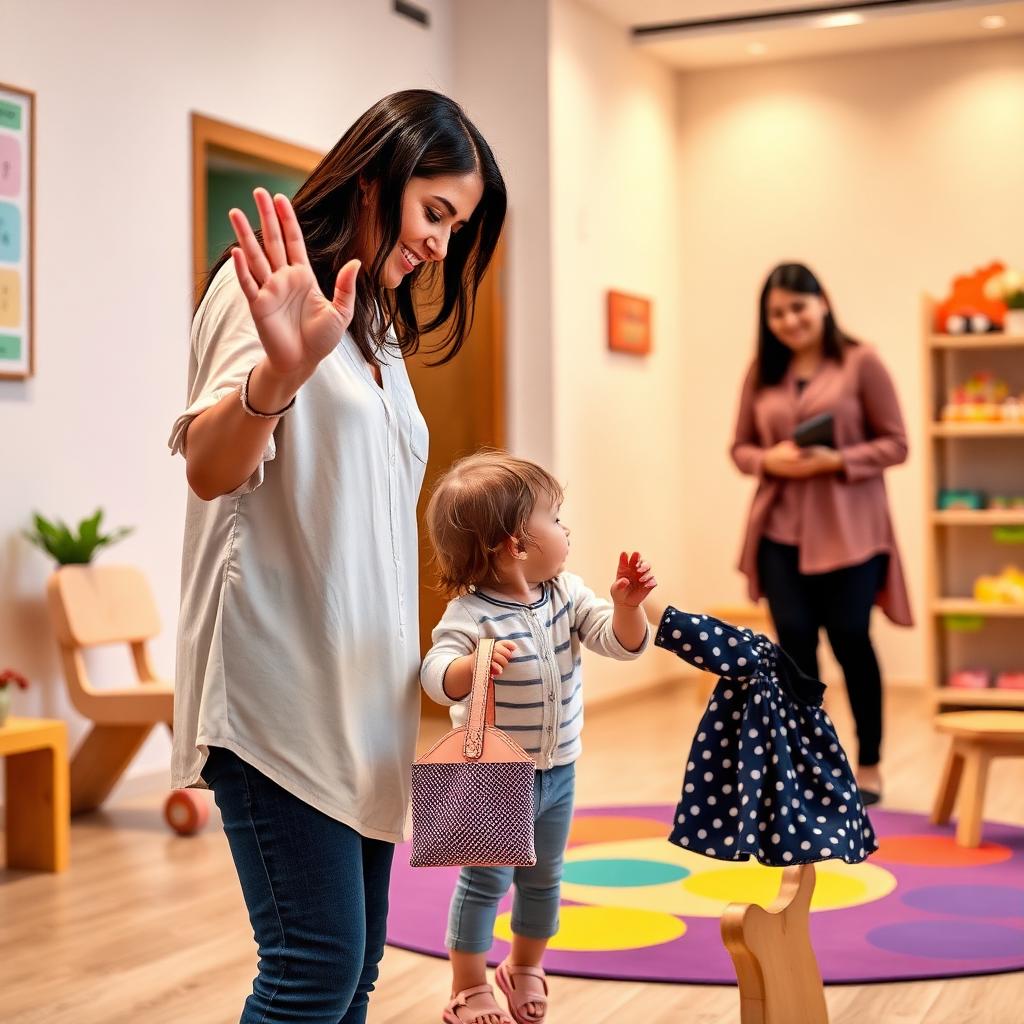
The first day of anything new is hard for toddlers. And if we are honest, it is hard for parents too. You are leaving your child in an unfamiliar place with people they do not yet know, and every instinct you have is telling you to stay.
But separation is a skill. For toddlers and for parents. And there are real, practical things you can do to make it easier for both of you.
Why settling in takes time (and that is completely normal)
Before the tips, it helps to understand what is actually happening when a toddler cries at drop off.
At this age, children have not yet developed what psychologists call object permanence in the emotional sense. They know intellectually that you will come back. But they do not yet feel it as a reliable truth in their body. The crying is not manipulation. It is genuine distress that you are gone and they are not sure what that means.
The good news is that this resolves with repetition. Every time you leave and come back, your child builds a little more of that emotional trust. After enough consistent cycles of you leaving and returning, their nervous system relaxes. Drop off stops being a crisis.
Most children settle within 2 to 4 weeks of consistent attendance. Some take a bit longer. Very few take longer than 6 weeks if the environment is warm and the routine is stable.
Before the first day
Visit the space with your child before they start. If the centre allows it, come for a look around while it is running. Let your child see the space, meet the educator, touch some of the toys. Familiarity reduces anxiety.
Talk about it in simple, positive terms. You are going to a place where you will play with other children. There will be games and songs. I will pick you up after. Keep it short and honest. Do not oversell it or build it up too much. Just make it matter-of-fact.
Practice short separations. In the days before the first class, leave your child with a trusted relative or friend for 30 to 60 minutes. Come back when you said you would. Make the pattern of leaving and returning normal before the stakes feel high.
Sort out your own feelings. Children pick up on parental anxiety with startling accuracy. If you are nervous at drop off, your child feels it and interprets it as a signal that the situation is dangerous. Work through your own feelings before you walk through the door.
On the first few days
Do a confident goodbye. Toddlers take cues from you. A warm, matter-of-fact goodbye (I love you, I will see you after circle time, bye bye) followed by actually leaving is far better than a prolonged, tearful handover that keeps escalating.
Do not sneak out. Ever. Even when the crying feels unbearable. If you slip away without saying goodbye, your child learns that you might disappear at any moment without warning. That makes anxiety worse, not better. Always say a proper goodbye.
Leave when you say you are going to leave. If you said goodbye and your child is crying and you come back in, you are teaching them that crying brings you back. You are reinforcing exactly the behaviour you are trying to move past.
Trust the caregivers. Most children stop crying within 5 to 10 minutes of the parent leaving. The upset at drop off rarely reflects how the child actually spends the session. Ask the educator how your child was after you left. The answer is usually very different from what you imagined.
During the settling in period
Stay consistent with attendance. The weeks where parents pull back because the drop off was hard are the weeks that undo the progress already made. Inconsistent attendance means the child never gets past the initial adjustment phase.
Keep the pickup warm and calm. When you collect your child, greet them happily but without excessive drama. A big excited reunion can actually teach children that pickup is the emotional highlight of the day, which can make drop off harder by contrast.
Ask for feedback from the educators after each session. You want to know: how long did they cry? How did they settle? What did they enjoy? This information helps you understand the arc of progress and gives you something real to hold onto on the hard mornings.
For toddler separation anxiety on the first day of class, the most effective thing any programme can do is build a genuine relationship between the educator and the child. At Just Goofing, our Mom and Me programme does this by keeping groups to a maximum of 8 children. Your child's educator knows their name, their preferences, their comforting signals within the first couple of sessions.
What you can do at home to help
Read books about going to school or a class. There are many good ones. The Kissing Hand by Audrey Penn is a classic for separation anxiety. Just reading about other children navigating similar transitions helps toddlers process what is happening.
Play pretend school at home. Set up a circle time in the living room. Put some toys in a bag as if packing for class. Sing the same songs they sing at the programme. Familiarity at home makes the real thing less alarming.
Acknowledge the feelings without amplifying them. I know it is hard when I leave. I love you and I will always come back. Short, calm, repeated. Not a lengthy conversation about why they need to be brave or a dismissal of the feeling.
The signs that settling is happening
These are the things to watch for over the first 4 to 6 weeks.
The crying at drop off starts to come later in the goodbye rather than starting the moment you arrive.
Your child begins talking about something or someone from the class at home.
Pickup starts going smoothly. Children who have settled are often reluctant to leave.
Drop off mornings stop being a battle. Your child walks in without needing to be carried.
These are real milestones. They happen for almost every child when the environment is right and attendance is consistent.
If you are looking for a programme in Gurugram where settling in is handled gently and consistently, come visit Mom and Me at Just Goofing. We have been through this with hundreds of families. It gets easier. We promise.
Just Goofing, C-2, inside Excelsior American School, Sushant Lok Phase I, Sector 43, Gurugram, Haryana 122009. Phone: 078277 91701. Open Tuesday to Sunday, 11 AM to 8 PM. Closed Monday.