A Day in the Life at Just Goofing Daycare Gurugram (Hour by Hour)
By Chitra Puri, founder of Just Goofing · June 01, 2026
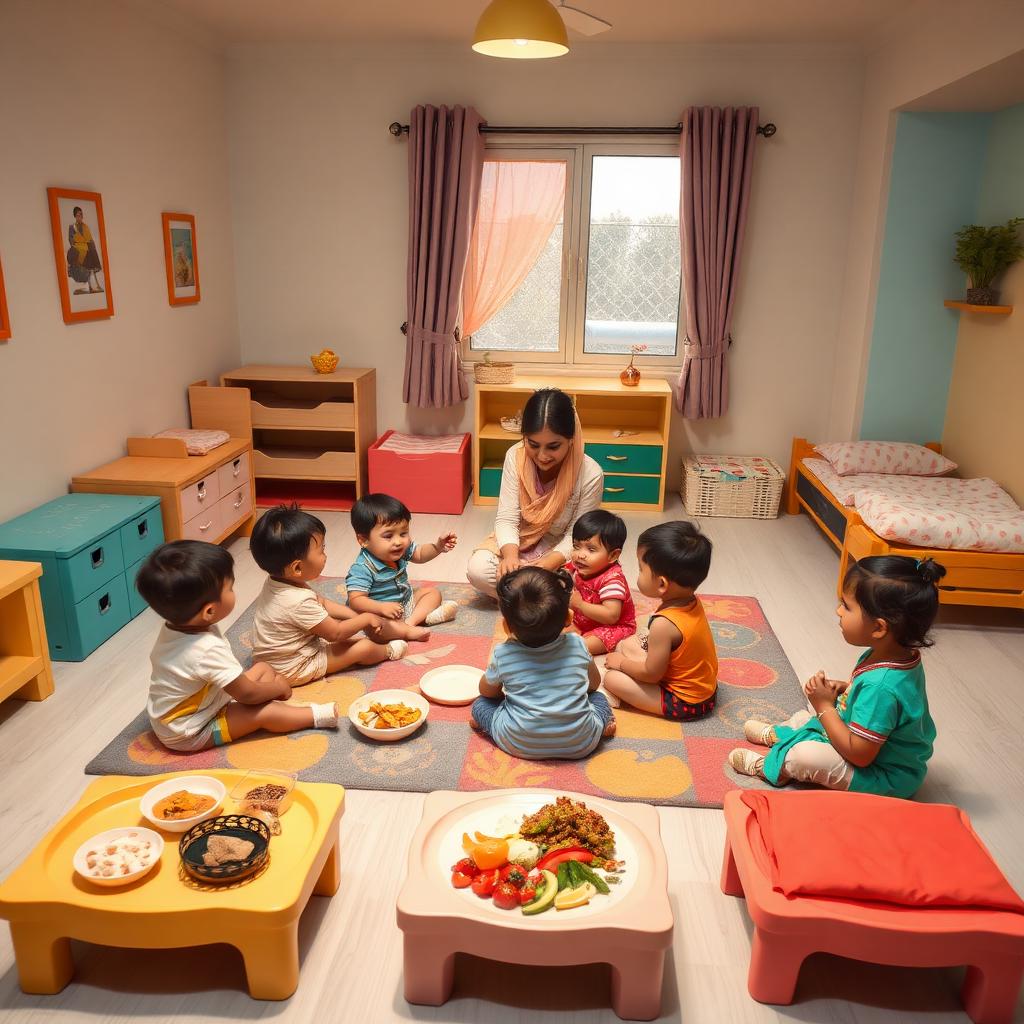
A lot of parents ask us the same question before they enrol. What does my child actually do here all day?
It is a fair question. You are leaving your toddler with us for several hours. You deserve a real answer, not a brochure version. So here is what a typical day at Just Goofing Daycare actually looks like, hour by hour, no fluff.
11:00 AM: Warm Welcome and Arrival
Your child arrives at the centre. Every morning starts the same way. Hand wash at the little sink by the door, a quick temperature check, and then free play while they settle in.
This settling in time matters more than it sounds. For toddlers, the transition from home to a group setting can be the hardest part of the day. Having a familiar caregiver waiting, a known space, and a low-pressure start makes an enormous difference. Children who have been with us for a few weeks walk in confidently and head straight to their favourite corner.
Parents do the handover with their child's caregiver directly. If there is anything important from the morning at home, a rough night, a skipped meal, anything at all, this is when we hear it.
11:15 AM: Breakfast and Morning Snack
Freshly prepared food made on site that morning by our in-house didi. Depending on the timing and what the child had at home, this might be a full breakfast or a morning snack. Warm milk, seasonal fruit, idli, upma, or fruit chaat depending on the day.
No maida. No refined sugar. No packaged snacks. Real, home-style Indian food that children actually recognise and eat.
Children sit together at the little tables. Self-feeding is encouraged with gentle help where needed. Eating together is a social skill in itself. Children watch each other, learn table manners without being formally taught, and the mealtime routine becomes one of the most settled parts of the day.
11:45 AM: Circle Time
Good morning song, calendar (what day is it, what is the weather today), a short story, and simple stretches to ease the body into the day.
Circle time does several things at once. It signals to children that the day has a shape and a rhythm. It builds vocabulary and early literacy through repetition. And it practises one of the most important school readiness skills: sitting in a group and paying attention to something that is not just directed at you.
For very young children, even sitting for 10 minutes in a circle feels like a lot. By the time they have been with us for a couple of months, 20 minutes feels easy.
12:30 PM: Learning Activity
The core activity of the midday session. Each day has a different focus.
Monday is language. Tuesday is early math. Wednesday is art. Thursday is music. Friday is science play.
These are hands-on activities built around a weekly theme. One week might be animals: sorting animal figures, matching sounds, painting animal footprints. Another week might be transport: car ramp experiments, traffic light games, paper boat floating.
The activities are designed by our educators based on the developmental stage of the children in each group. What we do with an 18-month-old looks very different from what we do with a 4-year-old, even within the same theme.
1:15 PM: Outdoor and Gross Motor Time
Weather permitting, the children go to the outdoor garden area. Climbers, slides, ball games, sand play, and the simple joy of running around.
On days when the outdoor AQI is above 200, all outdoor play automatically moves to our indoor gross motor zone. We monitor the live AQI every morning and the call is made before children arrive so parents always know what to expect.
This time is not free supervision. Caregivers are actively involved, running simple games, encouraging physical challenges, and helping children develop the gross motor skills that underpin everything from handwriting to sport.
2:00 PM: Lunch
A proper home-style lunch, not a snack. Dal, rice, sabzi, soft chapati, curd, and salad. All cooked fresh on site that morning by our in-house didi.
Self-feeding is encouraged throughout, with a caregiver sitting with each small group to help where needed. Children are never force-fed. If a child is going through a fussy phase, we work around it gently and let parents know in the daily handover.
The lunch table is also one of the most social moments of the day. Children chat, watch each other, and the mealtime conversation that happens naturally in a small group setting is one of the best vocabulary-building contexts available to toddlers.
2:45 PM: Wind Down and Nap Preparation
Story time, a lullaby, dimming the lights. Teeth brushing. Children change into their nap clothes.
This transition is important. Going from the energy of outdoor play and lunch directly into a nap room does not work for most toddlers. The wind down routine tells their body and brain that rest is coming. After a few weeks, children begin winding down instinctively when the lullaby starts.
3:00 PM: Nap Time
Each child has their own individual mattress. Fresh cotton sheets, changed daily. A soft blanket. A cuddly toy. Blackout curtains. AC set to 22 to 24 degrees. Soft white noise or lullabies on a low speaker.
A trained caregiver is present in the nap room throughout. Not just nearby. In the room.
The nap is one of the most important parts of the day for toddlers in a full-day care setting. Children who sleep well are calmer, more focused, and genuinely happier in the afternoon. Parents notice the difference in how their child is at pickup compared to days when the nap is disrupted.
Sheets are washed and changed every single day. This is not an occasional hygiene measure. It is part of the daily closing routine.
4:30 PM: Snack and Milk
Children wake naturally or are gently roused as the group wakes. Fresh snack and warm milk. Dhokla, ragi cookies, fruit chaat, or sprouts depending on the day.
Post-nap is one of the warmest parts of the day. Children are rested and relaxed. Conversations happen naturally. This is often when we see the quieter children open up and share something about what they were thinking or dreaming about.
5:00 PM: Free Play and Creative Time
Open-ended play on the shelves. Painting, clay, sensory bins, building blocks. No specific instructions. No required goal. Just exploration.
This unstructured time is intentional. Children who have had a structured morning and a full nap need time to simply follow their own curiosity. We set up the environment and then step back and watch what they do with it.
5:45 PM: Wind Down, Songs, and Goodbye Routine
Songs, a short dance session, the bag-pack routine where children pack their own bags with gentle guidance (this is a genuine school readiness skill), and then waiting for parents.
Every pickup includes a verbal handover from your child's caregiver. How they ate, how they slept, how they were in group activities, one thing they did or said that was worth noting, and anything to flag for the next day. Not a note on a clipboard. A real conversation.
By the end of this handover, you know exactly how your child spent their day.
6:00 PM: Parent Pickup
Families collect their children from around 6 PM, and evening care runs until 8 PM for parents who work later. The handover happens face to face with the caregiver who was with your child through the day. Same person. Same information. Every day.
Why this routine matters
The daycare routine that produces the best outcomes for toddlers is one that is consistent, warm, and genuinely developmental. It is not just supervision. It is not just play. It is a carefully structured day that builds the habits, skills, and confidence that children carry into school and beyond.
Everything described above is what happens every day at Just Goofing Daycare. Not on good days. Every day.
If you want to see it for yourself, come in for a free 2-hour trial visit. Walk through every room. Taste the food. Watch a circle time. Meet the caregivers. Then decide.
Just Goofing Daycare, C-2, inside Excelsior American School, Sushant Lok Phase I, Sector 43, Gurugram, Haryana 122009. Phone: 078277 91701. Daycare open Monday to Friday, 8:30 AM to 8 PM. Ages 1.5 to 5. 16 seats. 1:4 ratio. All inclusive at 15,000 per month.